
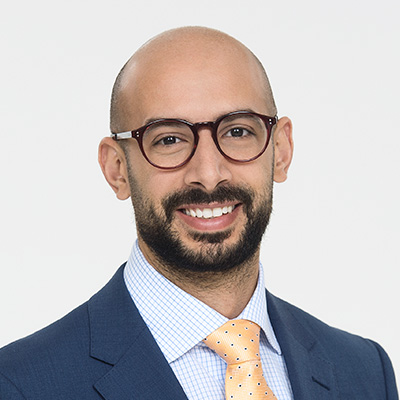
Saad Hamam

Organizations miss their own forecasts, not the market’s. The programs that fall short almost never fail at the point of approval. They stall later, quietly, somewhere in the middle.
Delivery belongs to the organization that owns the mandate. It cannot be transferred to a consultancy, and the work goes better when that is settled before it starts. What can be built, and handed over, is the capability to hold it.
Across more than a decade of transformation work in this region, the programs that did not reach their outcomes almost never failed at the point of approval. They stalled later, quietly, somewhere in the middle.
The failure is not where governance is looking. Steering committees, stage gates and monthly reviews are built to detect a program that has stopped moving. Very few are built to detect one moving confidently in a direction nobody owns.

Execution drift follows a limited number of recurring patterns, and each announces itself through observable signals that appear long before delivery is at risk. The tell matters more than the pattern, because the tell is available now.
Ambition is sized for the organization you would like to have. The tell: nobody in the approval meeting can name the single constraint that would stop the plan.
Approval is treated as the finish line. The tell: the last substantive leadership discussion of the program was the one that approved it.
Ownership dissolves at the entity boundary. The tell: more than one party is accountable, and everyone is comfortable with that arrangement.
Reporting measures activity, and activity is always green. The tell: status has not changed color in four quarters, and nobody finds that strange.
The plan and the money live in separate systems. The tell: asked where a benefit lands, the answer is a function rather than a budget line.
The most common failure is treating approval as the finish line. It happens in every sector and at every scale, and it is also the cheapest to correct: a governance redesign and a ninety-day plan, paid for in senior attention rather than committed capital.
The most expensive is the absence of a single accountable owner on cross-entity initiatives that commit capital. It does not announce itself. By the time it surfaces, the money is spent and the sequencing cannot be recovered.
Correcting only the common pattern improves how the portfolio reads without changing what it costs.

Who owns this outcome, and were they in the room when we agreed it? Where does this benefit appear in the financial plan, and against whose budget? What did our steering meeting decide last month, and can we point to it?
The third is the most revealing. If it is difficult to answer, the mechanism in place is reporting, and the organization is carrying the cost of governance without the benefit of it.
This region has never had a shortage of ambition. What it is building now is the discipline to deliver it, which is a harder thing and a more valuable one. The programs that reach their outcomes are the ones where someone could always answer who owns this, what does it change, and how will we know.

By Saad Hamam, Partner and Managing Director, Horváth Middle East, Saudi Arabia, and Patrick Braunschweig, Managing Director, Horváth Middle East, United Arab Emirates.